

We've Got Some Difficult Days Ahead ...
Following "the Way" in an Age of Protest, Power, and Fear

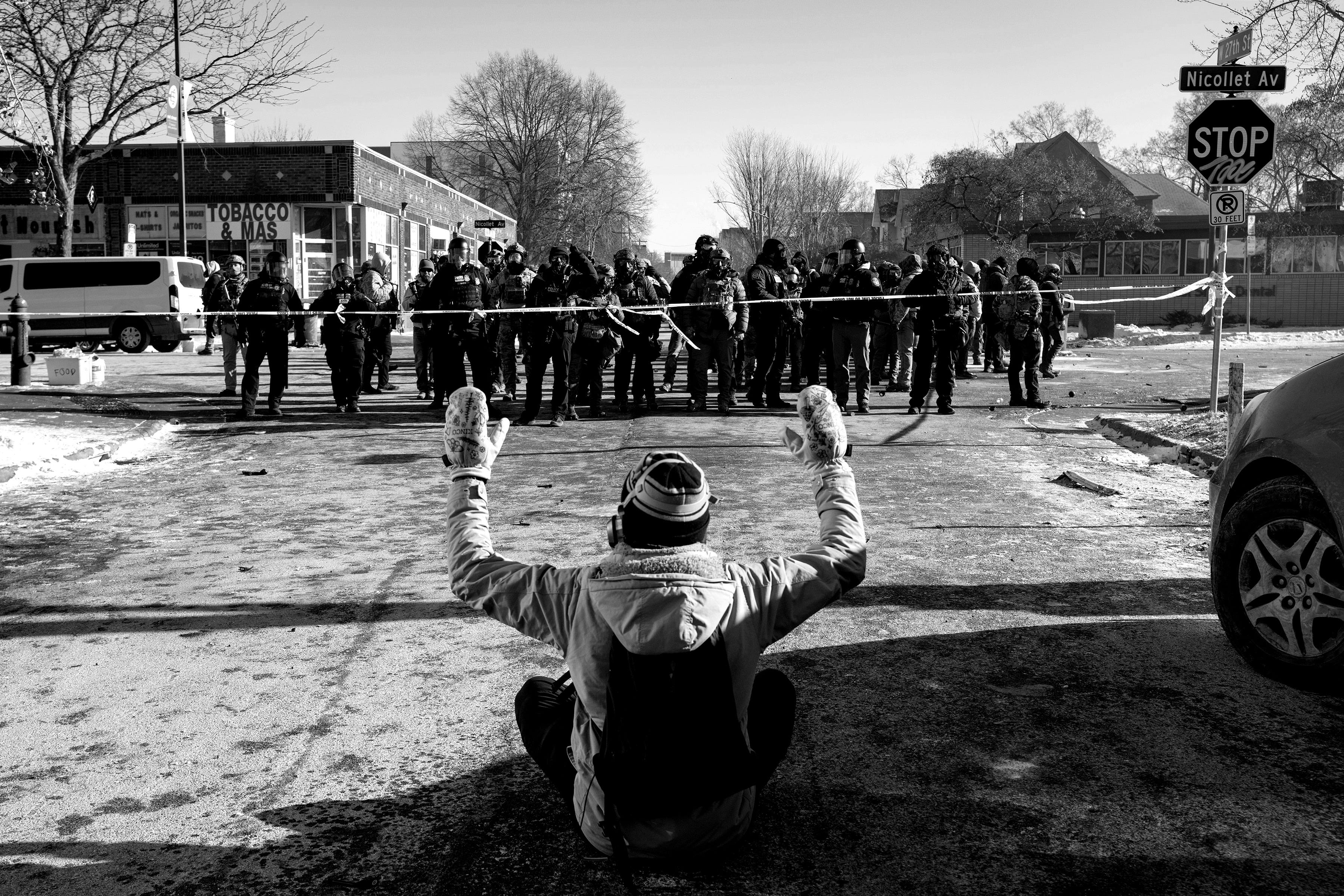
One of my students recently told me about a message she keeps seeing on TikTok:
“Empathy doesn’t work when others don’t show empathy toward you.
When others don’t respect you, violence is the only way to get them to stop.”
That sentence captures the spirit of our moment.
It feels emotionally honest—and practically convincing.
What she didn’t initially realize is that her enemy’s TikTok feed was telling them the exact same thing.
Different grievances.
Same conclusion.
Donna Hicks puts her finger on what’s really happening beneath the surface for many people right now:
“The glue that holds all of our relationships together is the mutual recognition of the desire to be seen, heard, listened to, and treated fairly: to be recognized, understood, and to feel safe in the world. When our identity is accepted and we feel included, we are granted a sense of freedom and independence and a life filled with hope and possibility.”
Every time I use that quote, I ask people to raise their hand if:
they want to be seen
they want to be heard
they want to be treated fairly
they want to feel included
they want freedom and independence
In every room I have ever been in, every single person raises their hand.
And just as consistently, every person in that room has a story about how someone else is not seeing them, hearing them, treating them fairly, or including them.
Here’s the part we miss:
Destructive conflict feels like exile to everyone.
We come to believe—almost instinctively—that the only way home is for others to finally see us, hear us, treat us fairly, include us, and grant us freedom and independence.
What blinds us is our inability—or unwillingness—to see that same need in our enemies.
That blindness doesn’t reduce conflict.
It intensifies it.
In both Dangerous Love and Seventy Times Seven, I argue that the way to transform destructive conflict into constructive conflict is to do the opposite of our natural instinct.
When someone shows us contempt, we want to harden.
When someone denies our dignity, we want to strike back.
When empathy is rejected, we want to abandon it altogether.
Dangerous love invites something far more disruptive.
Turning first—choosing to show empathy even to an enemy—is not capitulation.
It is an invitation to change.
Empathy does not excuse harm.
It interrupts the cycle that guarantees more of it.
This is not the fastest path to change.
But it may be the only one that lasts.
Followers of the Way
In his letter to the Romans, Paul lays out the moral formation required to follow Jesus in a fractured, violent world.
Romans 1–11 is largely theological: who God is, what God has done in Jesus, Israel and the nations, grace, mercy, and faithfulness.
In Romans 12, Paul makes a decisive turn—from belief to embodied practice, from doctrine to a way of life.
“Therefore…” begins.
This “therefore” means: In light of God’s mercy, here is how followers of Jesus now live.
That’s exactly where the early Christian self-description as followers of the Way matters (Acts 9:2; 19:9, 23; 24:14).
Paul is not offering abstract moral advice.
He’s describing a distinct communal path—a visible, practiced alternative to both Roman power and retaliatory honor culture.
Paul writes:
Be devoted to one another in love. Honor one another above yourselves.
Bless those who persecute you; bless and do not curse.
Do not repay anyone evil for evil.
If it is possible, as far as it depends on you, live at peace with everyone.
Do not take revenge…
If your enemy is hungry, feed him; if he is thirsty, give him something to drink.
Do not be overcome by evil, but overcome evil with good. (Romans 12: 9-21)
In short:
Let love be genuine
Outdo one another in showing honor
Bless those who persecute you
Never repay evil for evil
Never avenge yourselves
Overcome evil with good
This is not soft.
It is not naïve.
It is exceedingly difficult.
Paul is describing the Way—an embodied path first taught by Jesus in the Sermon on the Mount.
“Love your enemies.”
“Pray for those who persecute you.”
“Turn the other cheek.”
“Blessed are the peacemakers.”
These teachings were not given to people living comfortable, respected lives.
They were given to people living under occupation, humiliation, and threat.
Jesus was not minimizing harm.
He was refusing to let harm be the final teacher.
The Freedom Army
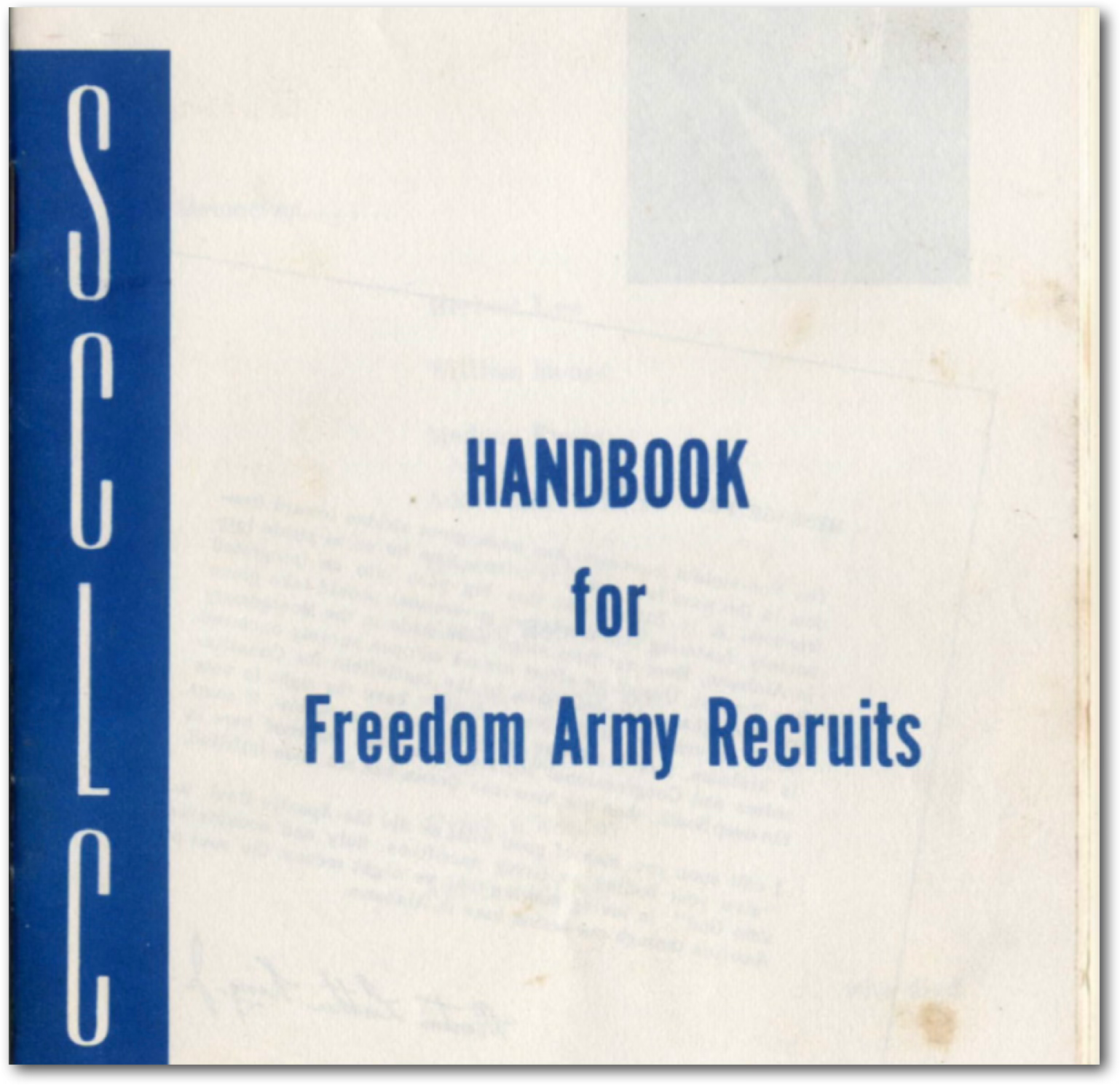
One powerful modern example comes from the work of Dr. Martin Luther King Jr. and the Southern Christian Leadership Conference (SCLC).
During the height of the U.S. civil rights movement, the SCLC organized Christians to become agents of change—to “save the soul of America.” One of their most influential programs was the Freedom Army, whose members led the Selma march and sacrificed to secure voting rights for Black Americans.
Participants committed to giving one year of their lives to nonviolent, community-based peacebuilding campaigns.
The Freedom Army Handbook described their work this way, in a section entitled “Our Weapon”:
“Nonviolent direct action is a way of overcoming injustice without becoming unjust yourself. It’s a way of fighting hatred without hating other people. It’s a way of conquering fear without being overwhelmed by it yourself. It is not a weapon of the weak, for it takes a stronger person to use nonviolence well, than it does to fight.
Nonviolence is the attitude behind our words and actions. Nonviolence begins by remembering that the people who oppose us are human beings, in spite of the way they act sometimes. With this attitude in us, we treat our opponents as humans, showing them goodwill, even when we oppose them. We try to let them know that we are fighting against segregation, not against white people.”
The Handbook also contains a “Code of Conduct” that each person pledged to abide by when encountering conflict. Many of their principles directly connect to “The Way.” They include:
“We recognize that suffering is usually endured in the process of social change; therefore we will joyfully accept all suffering upon ourselves, even unto death. We will never retaliate or inflict suffering on another person.”
“We will refrain from violence of the fist, tongue or heart. We will never swear or curse or make insulting or mean remarks to any person.”
“We will always deal fairly with our opponent, no matter what he does. We will speak honestly and to the point.”
“In the course of the struggle, if anyone insults or attacks a policeman or any segregationist, we will protect him from insult or attack even at the risk of our lives.”
“We will try to be helpful. We will be on the lookout for anyone who may need our material or spiritual aid.”
“We will observe at all times with both friend and opponent the ordinary rules of courtesy.”
“We will always remember that the movement seeks justice, reconciliation, and brotherhood rather than victory over our opponent.”
The last page of the handbook contained a card asking the reader to pledge to live these values by signing the card and mailing it to the SCLC. These commitments take the ethics of “The Way” out of the realm of abstract theory and into practice.
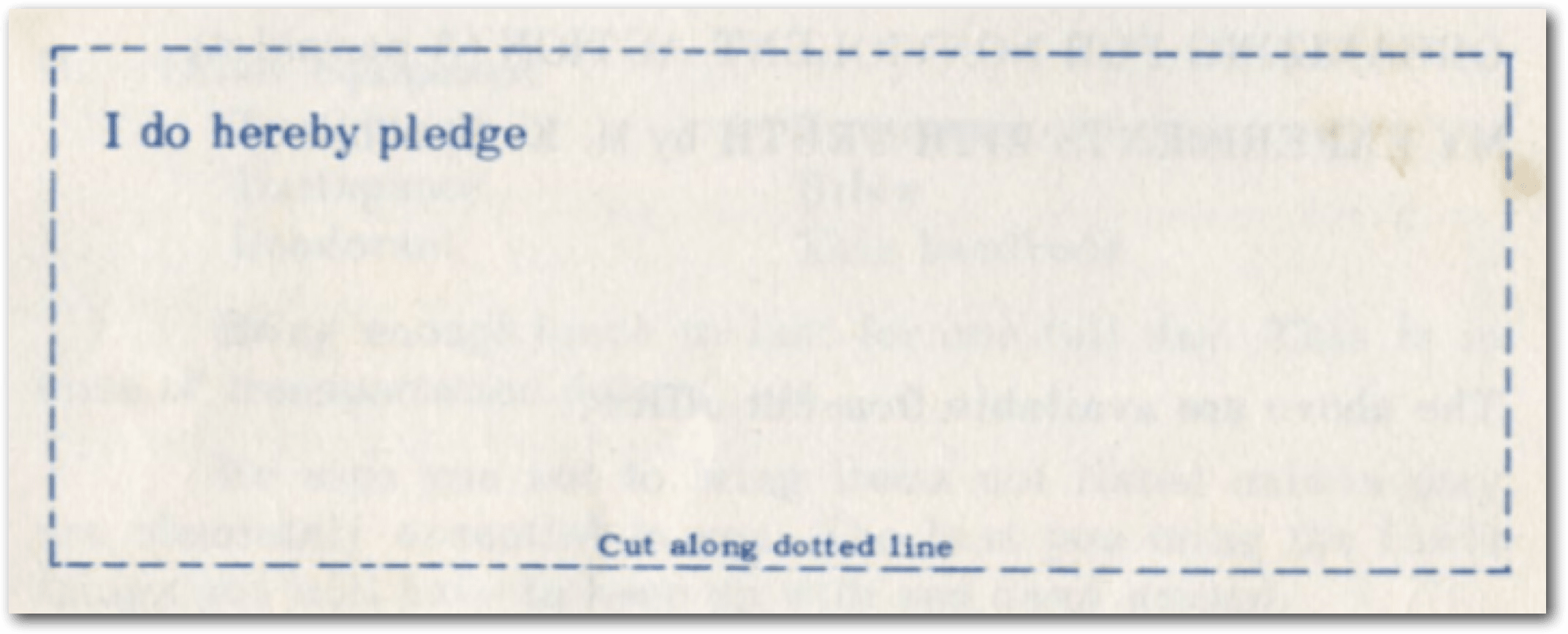
These commitments took the ethics of the Way out of theory and into practice.
The SCLC asked Christians to do more than believe in Jesus.
They asked them to act like Jesus—whatever the cost.
They taught that fear is an enemy to peace.
They called people to love their enemies, to set aside their stones—metaphorical and physical—and to protect even those who opposed them.
They sought restoration, insisting that the only victory that mattered to Jesus was a double victory—one where former enemies were reconciled.
The Way
We’ve got some difficult days ahead.
Our ability to follow the Way is being tested.
The temptation for anger to turn into hate.
The temptation to see our brothers and sisters as enemies.
The temptation to mock turning the other cheek as weakness.
The temptation to dismiss Jesus’s command— “As I have loved you, love one another”— as surrender.
For Christians still clinging to a self-defeating justification that says, “These teachings are hard. Who can accept them?” (John 6:60)
I invite you to hear the words of Jesus: “I am the way, the truth, and the life.” (John 14:6)
In a world filled with enmity and polarization;
in relationships filled with avoidance and contempt;
in hearts filled with pain, grief, and fear—so much fear—
Jesus needs disciples who will step into conflict and become peacemakers.
He needs disciples who can say: “This teaching is hard. I can accept it.”
He needs disciples who choose love over fear.
So I pray that the eyes of our hearts may be enlightened,
that we may know the hope to which he has called us,
that we may believe the hard things he has spoken are spirit and life,
that we may trust that long-suffering, gentleness, meekness, mercy, and love unfeigned are the only path to sustainable change.
And while our efforts may not change the world, they will surely change ours.
In the name of the man anointed to heal the brokenhearted.
In the name of the man called to preach deliverance to the captives.
In the name of the man sent to recover sight to the blind and set at liberty the bruised.
In the name of the man who turns stony hearts into flesh.
In the name of the man who implored us to love our enemies.
In the name of the man who said that what we do to the least of these, we do to him.
In the name of the man who said, “Let the one without sin cast the first stone.”
In the name of the man who taught, “As I have loved you, love one another.”
In the name of the man who proclaimed, “Blessed are the peacemakers.”
Do not be overcome by evil, but overcome evil with good.
You’re invited to Interfaith REPAIR: A Gathering of Interfaith Peacemakers
When: Friday, March 6, 9 AM - 5 PM MT
Where: First Presbyterian Church of Salt Lake City, 12 C St E, Salt Lake City, 84103
Across the world’s traditions, people of faith have long carried tools for peace. At Interfaith REPAIR, faith leaders will open their texts, practices, and lived experience to show how their communities cultivate courage, compassion, and repair. Through teaching, ritual, workshops, and real encounter, attendees will discover a mosaic of wisdom for healing conflict today.
Featuring insights from:
Early Buddhist principles of peacemaking and mindfulness (Sam Akers)
Hindu Kirtan (Ancient Indian Practice) ritual highlighting inner and communal transformation through music & mantra (Ravi Gupta & family)
A Presbyterian take on Forgiveness & Faith De- or Re-construction (Reverend Jamie White, Pastor, First Presbyterian of Salt Lake City)
Jewish frameworks for sacred disagreement (Rabbi Spector, Congregation Kol Ami)
The core elements of reconciliation (James Patton, Quaker Peacemaker)
Latter-day Saint lens on the paradoxes of committed eternal relationships (Wendy Ulrich)
Check out the schedule, workshop descriptions and facilitators’ bios here!
This is SO good. Thank you so much. My heart, soul and mind needed this today.