

Is Peacemaking Naïve?
Lessons from gym floors and the National Governors Association on the slow work of hope

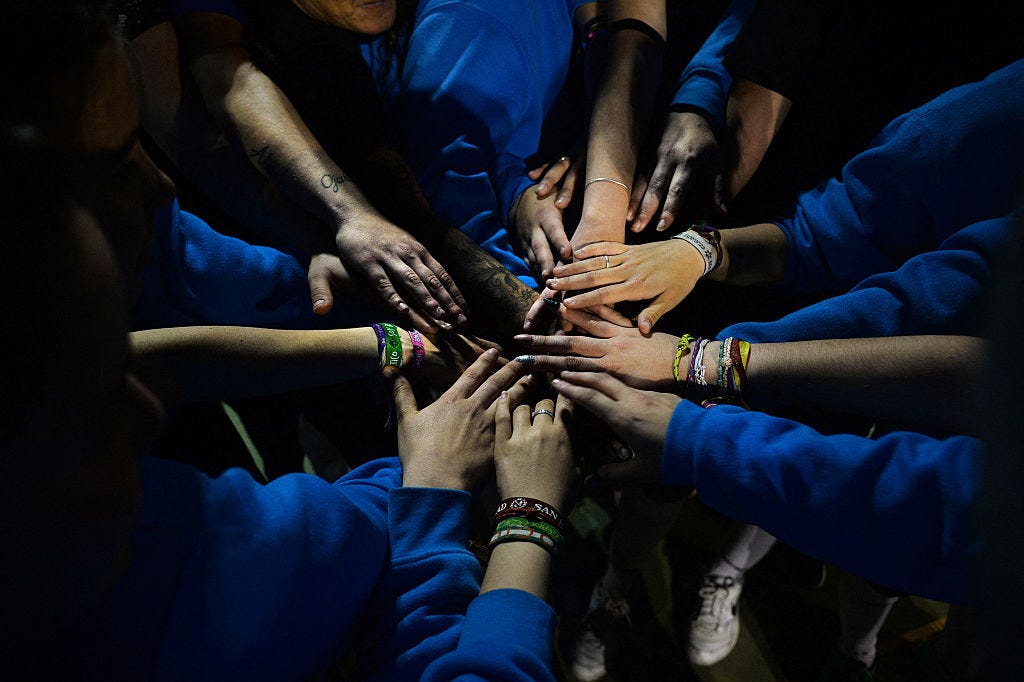
“By small and simple things are great things brought to pass”
Alma 37:6
How can anyone have hope in times like these?
There is no shortage of voices telling us that peacemaking is impractical or even hopeless in a world this fractured.
And yet, something important has become clearer to me in recent weeks.
On the opening day of the National Governors Association Winter Meetings, pollster Frank Luntz presented data to governors from across the country on how Americans feel about the growing divides in our country. The results were striking, not because they revealed deep partisan differences, but because they revealed how much agreement there is beneath the surface.
Across party lines, Americans overwhelmingly say that what they want most in political conversations is respect—far more than civility, politeness, or ideological alignment. Large majorities agree that the country is deeply divided, that our unity is failing, and that this division carries real costs: rising extremism, unsolved problems, and the erosion of shared civic norms. Most people believe there is more that divides us than unites us, and many experience this moment not as hopeful, but as exhausting.
What stood out most to me, however, was this: despite the frustration, Americans aren’t asking for more polarization. They want leaders who are honest, accountable, fair, and willing to solve problems. They want leaders who govern, not just posture. In other words, the appetite is not for endless conflict—but for collaboration.
Which suggests that what we are facing is not simply a values crisis, but a discouragement and collective action problem.
It isn’t that good people aren’t doing meaningful work. They are. Every day. The problem is that discouragement convinces us our efforts don’t matter, while polarization keeps us stuck “teeing off” on our ideological opponents from a distance rather than participating in the slow, tangible work of repair.
And yet—amid all of this—I’m also struck by another reality, less reported but just as true.
Hope grows when people move.
And people are moving —often far from the spotlight. Amid these dangerous times, so much good is happening all around us. Everywhere I go, even in the midst of deep conflict, I am amazed by the charity, selflessness, and quiet courage of people working to build the bridges of repair.
Over the past week, I’ve worked with several groups of people who give me hope that the efforts of individuals and small communities will not be in vain—from the deeply local to the national.
I want to introduce you to three of them - PeacePlayers Detroit, the National Governors Association and Disagree Better.
PeacePlayers says: This is possible.
The Governors say: This is scalable.
Disagree Better says: This is how.
PeacePlayers Detroit: The Power of Grassroots De-Polarization
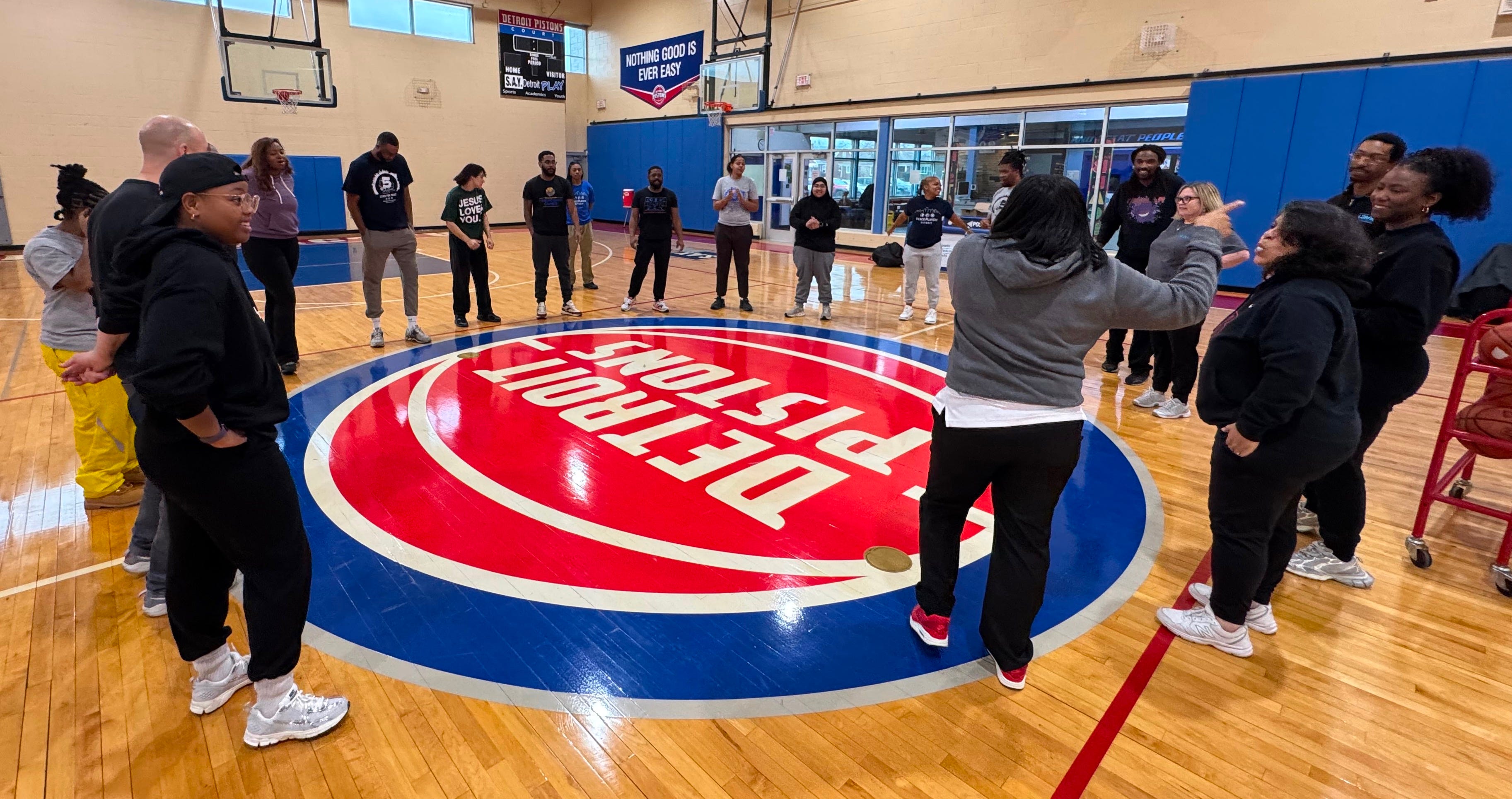
Last week I spent some time in Detroit with Jasmine Cooper, the Executive Director of PeacePlayers Detroit and her team.
As many of my readers know, I’ve spent more than twenty years working with PeacePlayers in the Middle East, witnessing firsthand the power of their work to bridge the divides between Palestinians and Israelis.
Over a year ago, one of their leaders in the Middle East asked me a provocative question while I was working with them in Jerusalem: “Why are you here? Why aren’t you back in America, working on the same problems we’re facing here?”
It was a wake-up call.
I’ve been diving deeply into the growing polarization in the United States ever since, and this trip marked my first opportunity to work directly with PeacePlayers in Detroit.
I led a two-day training with Jasmine’s staff and coaches on a community center gym floor focused on bridging divides through the game of basketball and the principles of Dangerous Love.
We centered our time around three core values:
Seeing People as People
Inside–Outside Transformation
Creating a Culture of Collaboration
These aren’t just slogans for PeacePlayers. They are daily practices tested in a city where diversity is real, but integration often is not.
The Detroit metro area is home to African American and white communities, along with large Arab, Latino, and Bengali populations. And yet segregation, limited interaction, and fear across cultural and geographic divides continue to prevent many of its residents from fully thriving.
PeacePlayers Detroit works directly in the midst of this reality. The program engages more than 100 youth ages 10–18 in year-round, multi-year basketball training, conflict resolution education, and leadership development. These young people meet weekly in their own neighborhoods and multiple times each week across communities. They study leadership, mentor younger participants, visit universities, and explore one another’s neighborhoods—learning not just about conflict, but about responsibility, service, and belonging.
Watching this work up close is both inspiring and sobering.
It isn’t easy. Many of these young people have never had meaningful contact with kids from “the other side” and lack significant access to resources. Parents are often hesitant. Communities are cautious. Fear doesn’t disappear just because a basketball is involved. And when conflict flares progress can feel fragile.
But basketball demands collaboration. You can’t win alone. And over time, something begins to shift: passing the ball, calling someone by name, celebrating a teammate’s success. What looks small from the outside becomes transformative on the inside.
PeacePlayers has always understood that this work unfolds over decades, not news cycles. It is generational. Often exhausting. And yet it is precisely this slow, relational labor that makes peace imaginable where many insist it is impossible.
Spending time with Jasmine and her team reminded me of something essential: peacemaking is not about fixing “the world.” It is about creating conditions where people can encounter one another differently—and then choosing, again and again, to take the dangerous steps of encounter and curiosity.
This is the long-short way that starts small and slow with big long term impact.
The NGA & Disagree Better: How to Scale the Work of De-Polarization
What I saw in Detroit on gym floors and in community centers is the same posture I’ve seen, more unexpectedly, beginning to take root in some of our highest levels of public leadership thanks to the recent work of the National Governors Association (NGA) and Disagree Better.
At a moment when national politics feel locked into zero-sum tribal warfare, several governors—Republican and Democrat—chose a different posture. They’re practicing engaged curiosity
In the weeks leading up to the NGA Winter Meetings, I had several behind-the-scenes conversations with key leaders at the NGA and Disagree Better. At the center of this effort was Brandon Tatum, the CEO of the NGA, and Marianne Viray, Executive Director of Disagree Better, whose leadership—often at personal and professional cost—insists that bipartisan cooperation is not a luxury, but a responsibility.
When President Trump initially declined to invite Democratic governors to a White House meeting, Tatum issued a statement that quietly but firmly articulated a different approach focused on problem-solving over partisan politics:
“I know that our Republican and Democratic Governors hold strong beliefs and take firm positions every day. Yet when they lead their states and territories, they lead all of their citizens, regardless of party. Leadership requires serious, good-faith conversations grounded in the understanding that reasonable people can disagree. Americans are weary of constant partisan conflict and the perception that Democrats and Republicans cannot work together.”
The statement did not deny disagreement or minimize conflict. It simply refused to let contempt define the terms of engagement. Ultimately, the White House agreed to invite all governors.
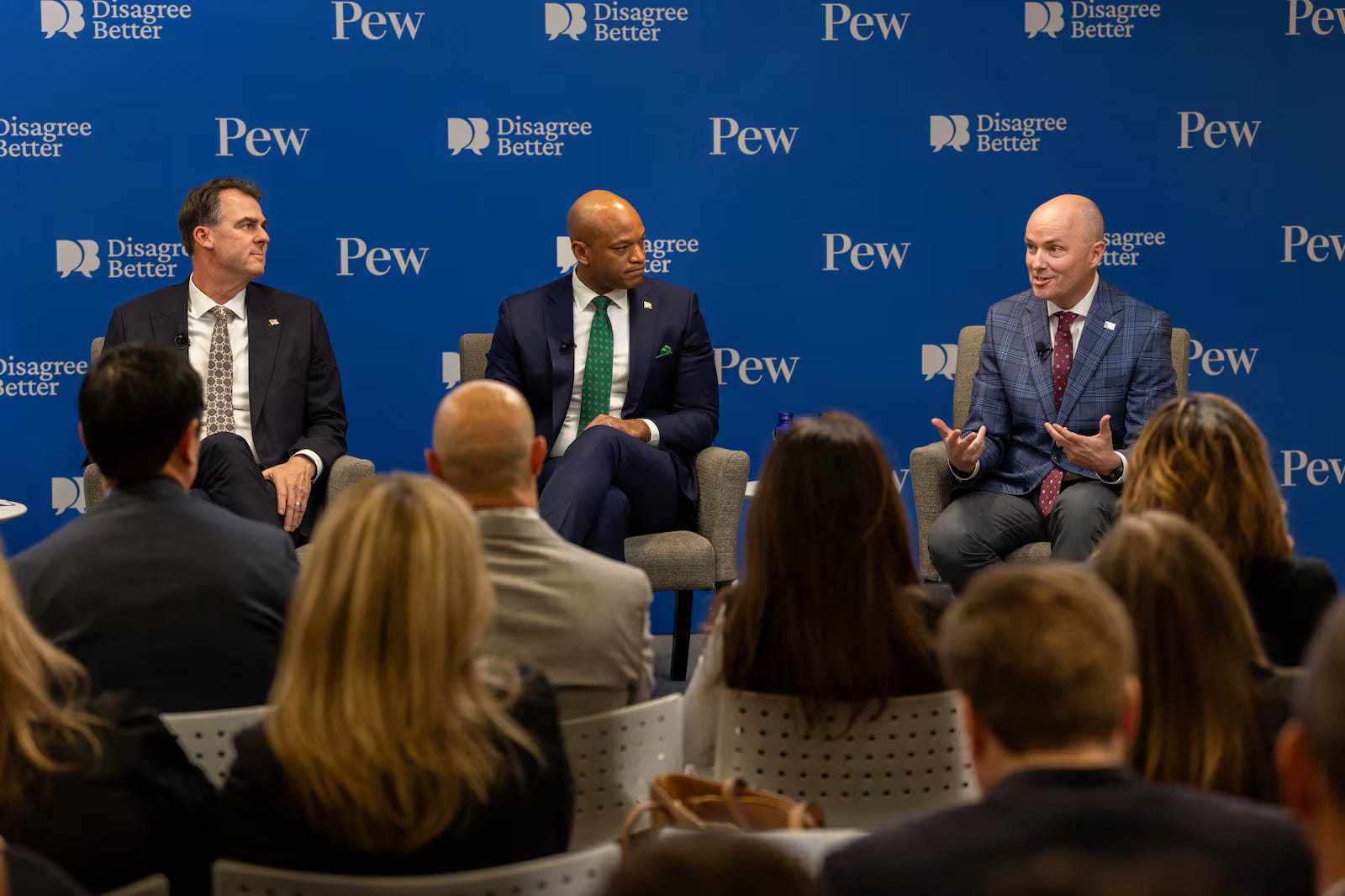
This same ethic was embodied on February 18 during a Disagree Better session featuring Governors Kevin Stitt (Oklahoma), Wes Moore (Maryland), and Spencer Cox (Utah), and again at the NGA Winter Meetings.
All three of these governors risked partisan backlash to come together to find common ground.
Governor Stitt emphasized the humanizing power of relationship:
“When you actually meet someone, you break bread with them, you get to know their families… you know that they care. We’re Americans first.”
He was clear that difference does not require uniformity:
“Oklahoma doesn’t want to be California. California doesn’t want to be Oklahoma—and that’s OK. One-size-fits-all solutions are a big problem.”
Governor Moore added that a culture of collaboration is needed in America right now:
“We’re going to debate our ideas, we’re going to coordinate, we’re going to find places where we’re seeing best practices all across the country, we’re going to model them and adopt them and steal them and bring them for our states. And there is no person, nor one office, nor one administration that is going to disrupt that because governors are just built different.”
Governor Moore extended this vision into civic life, describing Maryland’s statewide service initiative that funds young adults for a year of community service after high school, that looked reminiscent of PeacePlayers Detroit’s model:
“What this country needs most right now is to get to know each other again. People are far too comfortable in their silos.”
Governor Cox named what is truly at stake:
“We’re losing virtue in our country. This experiment in self-government can’t work unless we change the incentives. We have to be civically minded again…It’s OK that we’re different. We don’t all have to be the same.”
Governor Cox closed inviting all of us to be part of the change:
“If you tell kids, don’t change the world—change your neighborhood—the irony is that’s actually how you change the world … We just have to be good people. If America ceases to be good, she ceases to be great.”
From Deep Conflict to Transformation
If we cease not only to be good, but to do good, we, too, cease to be great.
None of what I witnessed last week erased disagreement. None of it denied harm, injustice, or deep moral conflict. But something important was happening—in Detroit and in Washington, D.C.: the logic of dehumanization was interrupted.
What we are facing right now is not just a crisis of values. It is a crisis of discouragement and collective action.
Discouragement tells us our efforts don’t matter. Polarization tells us our only real option is to attack our ideological opponents from a distance. Together, they keep us passive—watching, reacting, “trolling” online—rather than participating in the slow, tangible work of repair.
What we need is not fewer opinions, but more participation.
When a newspaper once asked, “What’s wrong with the world?” the Catholic thinker G. K. Chesterton famously replied: “The answer to the question ‘What is wrong?’ is, or should be, ‘I am wrong.’”
Too often, I am failing. It’s not only the world or others—it’s me. I feel overwhelmed by the enormity of contempt swirling around me and in my own heart. I’ve struggled to forgive and to help others forgive. I’ve struggled to choose reconciliation. I’ve too have thought and acted in ways that have created the problem.
And still, the call to be a peacemaker does not fade.
We need more governors and elected officials willing to risk political capital for principled engagement. More local leaders willing to build across lines rather than profit from outrage. And more ordinary people willing to lean into hope—not as a feeling, but as a practice—by getting involved in real, concrete efforts to turn the tide of polarization and destructive conflict in our homes, our communities, and our country.
As Marianne, who leads Disagree Better, puts it, we need to “champion the morally courageous behaviors we want more of—by naming them, acknowledging them, and letting leaders know we saw them and appreciate them.”
So here is the invitation.
Don’t start by trying to change the world. Start close in. Start by showing up somewhere close to home: your family, your congregation, your workplace, your community.
Ask yourself a simple question: Where am I being called to stay rather than walk away?
Choose one place where you will practice peacemaking—not perfectly, but faithfully. Find a local effort (here’s some cool stuff happening in Utah) doing the slow work of repair and offer your time, attention, or support.
If you’re in a position of leadership, use it to reward collaboration rather than outrage. If you’re a citizen, name and encourage the leaders who choose restraint, dignity, and courage. If you are a community member, reach across divides to help solve the problems that beset us instead of running to social media to complain.
Move from commentary to commitment.
From outrage to responsibility.
From despair to participation.
We don’t need everyone to do everything. We need more people willing to do something.
Hope grows when people move.
Peacemaking is not naïve. It is practiced.
It is not the denial of evil or the refusal to name power. It is the disciplined choice to act without surrendering our humanity to fear, contempt, or despair. It is the courage to remain in relationship when walking away—or striking back—would be easier.
By small and simple things are great things brought to pass—not because they are dramatic or sufficient on their own, but because they form the moral habits that make community possible.
Hope is not the belief that everything will turn out fine. Hope is the decision to act in ways that make goodness more likely—even when outcomes are uncertain.
And right now, more than ever, that decision matters.
I have hope because these efforts are part of something much larger. Every day, multitudes of people are quietly doing the work of restoration—supporting families under strain, caring for the sick and wounded, serving their neighbors, reducing violence, and helping communities heal, repair, and bridge divides. They risk their time, health, and livelihoods to restore dignity and make room for healthier conflict.
I’ve seen miracles happen. I’ve seen enemies choose constructive conflict over destructive conflict. I’ve witnessed mercy, forgiveness, and the risk of embrace in some of the most intractable conflicts in the world.
Everywhere I turn—even amid pain and chaos—I see:
People on the move.
Love on the move.
Peace on the move.
The question is not whether hope is possible.
The question is: will we be on the move with them?
We are only ONE WEEK away from Interfaith REPAIR!
When: Friday, March 6, 9 AM - 5 PM MT
Where: First Presbyterian Church of Salt Lake City, 12 C St E, Salt Lake City, 84103
Across the world’s faith traditions, faith leaders have long carried tools for peace. Sacred texts, rituals, histories, and lived practices offer pathways for repair—within ourselves, between communities, and across generations.
What: Interfaith REPAIR is a one-day gathering where participants from across faith traditions come together to explore how conflict is navigated and peace is practiced, taught, and embodied in different spiritual lineages, and how those tools can help us navigate conflict in an increasingly fractured world.
This is not a lecture-style conference. It’s an intimate, participatory, workshop-based day designed to help you engage deeply, learn across difference, and leave with tools you can use everyday in relationships at home, at work and in the world.
Who Interfaith REPAIR is for:
Faith leaders and community organizers
Educators and facilitators
Activists seeking spiritual grounding
Curious minds who love to learn about world religions, customs, traditions, and cultures. No religious affiliation required. Curiosity is enough.
We encourage you to try at least one workshop outside your own tradition and learn from a different faith community.
Check out the schedule, workshop descriptions and facilitators’ bios below!
FULL SCHEDULE: Friday March 6, 2026
8:30 AM – Arrive for check-in
9:00 AM – Opening remarks with Chad Ford & Patrick Mason
9:30–12:30 – Morning workshop of choice (three hours)
12:30–1:30 – Lunch* & Peacemaker Mingle
1:30–4:30 – Afternoon workshop of choice (three hours)
4:30–5:00 – Closing remarks with Ravi Gupta
*Lunch is included with ticket purchase.
Tickets cost $100 and are for full-day participation; event access includes one morning workshop, one afternoon workshop, and lunch.
Space is limited to just 250 tickets!
FEATURED WORKSHOPS
“Repairing Our Relationship with the Living World”
Indigenous and faith based approaches to religious ecology with David Whippy
Workshop Description: Environmental harm points to broken relationships—with the land, within and between communities, and with the sacred responsibility many of our faith traditions teach. In this interactive workshop, David will lead a discussion on Religious Ecology as a faith-related human practice of repair and reconciliation.Through reflection, small-group dialogue, and brief shared insights, you will explore how different faiths understand responsibility, stewardship, and care for the Earth. Together, we will listen across differences, hold space for accountability and hope, and consider how repairing the world includes healing our relationship with the living systems that sustain us.
NEARLY SOLD OUT! “Cultivating Inner Peace of Mind through the Compassionate Heart”
Early Buddhist principles of peacemaking and mindfulness with Sam Akers
Workshop Description: Sam will lead participants in heart forward mindfulness practices, small group dialogues and gentle movement all through the lens of the friendly, kind and compassionate heart of Metta. Metta, the Pali word for friendship or kindness, is for all beings, without exception, including ourselves. Here, you’ll explore how having an open heart naturally supports healing and inner peace.
NEARLY SOLD OUT “Kirtan Immersion: Peacemaking through Music and Mantra”
Hindu ritual of inner and communal transformation through music & mantra with Ravi Gupta & family
Workshop Description: Kirtan is an ancient practice from India that aligns our body and mind through music and mantra. Participants in this workshop will explore the power of devotional music to create pathways of peace within ourselves and in community with others. We will learn techniques of mantra meditation as we immerse ourselves in sacred sound. No prior experience with kirtan needed.
“Forgiveness: the Power and Freedom of Letting Go”
Forgiveness perspectives from the Christian tradition with Reverend Jamie White, Pastor, First Presbyterian Church of Salt Lake City
Workshop Description: Do you feel stuck by what’s happened to you? Or something you’ve done? Not sure how to let go of your bitterness? Tired of carrying around resentment? This workshop is designed to help us process our pain, release resentment, and move towards healing as we choose forgiveness. We’ll draw from both spiritual resources and therapeutic skills-based practices to offer a variety of tools to move beyond what’s happened to us and toward freedom. Bring your grudges!
NEARLY SOLD OUT! “When Faith Falls Apart: Moving through Doubt and Deconstruction to the Other Side”
Faith de-/reconstruction with Reverend Jamie White and husband Dave White
Workshop Description: Questioning and critiquing religious belief isn’t really a new idea, even if ‘deconstruction’ language has gone mainstream. People have—always and everywhere—doubted and questioned their religious traditions; a natural, healthy, and necessary factor in spiritual growth. But what happens when those questions threaten to unravel everything we used to hold sacred, including relationships with loved ones who may not understand? Even more there can be often an impulse to toss out all our beliefs, like ‘the baby with the bathwater’, in our attempt to live authentically and freely. But what happens after this messy and painful season, when we discover that we still hunger for God and may want to reevaluate a life of faith? Reverend Jamie White and her husband Dave will co-host this workshop that focuses on moving through deconstruction with grace for ourselves and those we love, offers resources and practices for spiritual healing, and explores what reconstruction might look like on the other side.
NEARLY SOLD OUT! “Arguments for the Sake of Heaven: How Disagreement and Confrontation can be Holy Experiences”
Jewish frameworks for sacred disagreement with Rabbi Sam Spector, Kol Ami
Workshop Description: Rabbi Spector shares how confrontation and disagreements can lead to growth and understanding and create sacredness in your communities. We will see examples from the Hebrew Bible (Old Testament) and Talmud that show how we can hold strong differences in view and yet still maintain respect and understanding. Through finding dignity in differences, we can create communities and societies that are safe and thoughtful despite lacking consensus.
NEARLY SOLD OUT! “The Core Elements of Reconciliation Practice”
Exploring the core elements of reconciliation with James Patton, Quaker Peacemaker
Workshop Description: Whether between individuals or communities, reconciling a relationship damaged by harm is a challenge that often involves unpacking convoluted motives, perceptions of history, abiding pain, anger, and fear, and complex justifications for destructive behaviors. While each situation will be different, and deeply marked by individual experiences, some basic and principles apply across reconciliation efforts, such as addressing the past, confronting perceptions of the other, and seeking to transition beyond acts of harm—including the delicate nuances of dialogue, restitution, and pardon. This workshop explores the ideas and practices of reconciliation, with the objective of moving a broken relationship towards a less broken one.
NEARLY SOLD OUT! “Families Can Be Together Forever – But What About Today?”
Navigating the paradoxes of committed relationships with Wendy Ulrich, PhD, MBA, author | Member of the Church of Jesus Christ of Latter-day Saints
Workshop Description: The possibility of eternal marriage and family is a fundamental doctrine of the Church of Jesus Christ of Latter-day Saints. However, the prospect of an eternal relationship sounds like anything but heaven when we can hardly get through dinner together today. This workshop will explore the stages of long-term committed relationships—in families and even with God—then suggest tools for navigating relationship paradoxes that call for both individual flourishing and committed connection, both fixing problems and tolerating them, and both holding on and letting go. Bring your current relationship challenge or fear and let’s see if we can move the needle toward peace, hope, and flourishing—whether or not we believe in forever.